How To Choose The Best Retail Cleaning Company In Sydney?
The Ultimate Guide To Choosing A Competent Retail Cleaning Company Have you ever walked into a dirty retail…
Explore How To Choose The Best Retail Cleaning Company In Sydney?
Retail cleaning is the contracted cleaning of a trading store — the shop floor, entry and window line, fitting rooms, counters and point-of-sale, customer amenities where the store has them, and the stockroom, staff room and back-of-house areas customers never see.
What makes it its own category is that the floor is the product display. In an office a smeared glass door is untidy; in a store it sits between a customer and a decision to walk in. Retail cleaning is judged on the first two metres inside the door and on the window line, and it is judged by people who are not looking for it.
The work sits under the Work Health and Safety Act 2011 (NSW) and the Work Health and Safety Regulation 2017, regulated by SafeWork NSW. In a store the practical edge of that is slip risk at an entry on a wet day and wet-floor management if any cleaning happens while customers are present.
JBN Cleaning services shops, showrooms, shopping centre tenancies, supermarkets and multi-site retail chains across the Sydney metropolitan area from our base in Pendle Hill.
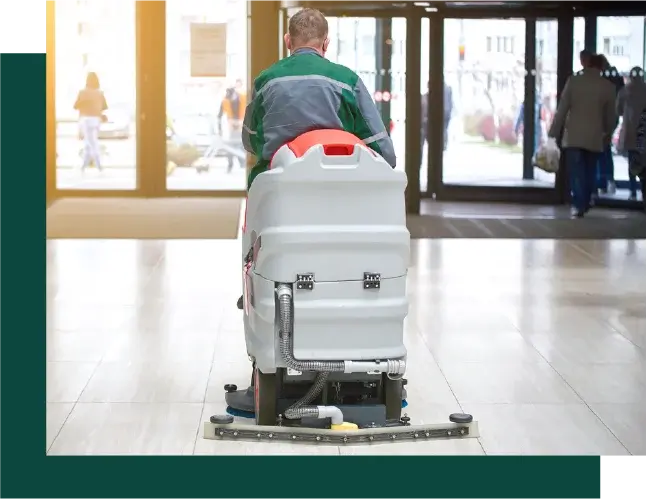
A retail cleaning schedule covers entry glass, door hardware and matting, the shop floor including under fixtures, display glass and mirrors, fitting rooms, the counter and point of sale, customer amenities, and the stockroom and staff room. Carpet extraction, floor resealing and high dusting are scheduled around trade and quoted separately.
Entry and window line. Entry glass inside and out to a clean edge, door push plates and handles, entry matting lifted and cleaned under, and the threshold. This is the highest-value ten minutes of the entire visit.
Shop floor. Hard floors swept and mopped or carpet vacuumed, including under and behind fixtures rather than only the open runs. Fixture bases, plinths and the fronts of gondolas and display units. Mirrors and display glass.
Fitting rooms. Floors, mirrors, seating, hooks and rails, and the corners where pins, tags and price stickers collect. Fitting rooms are the area customers most often use to judge a store’s standards, and they are the area a cheap contract cuts first.
Counter and point of sale. Counter top, terminal and pin pad, the customer side of the counter, and the floor behind it where staff stand all day.
Customer amenities. Where the store has them, every visit, with consumables restocked.
Back of house. Stockroom floor and aisles, receiving area, staff room and staff toilet, and bins. Staff areas matter more than their visibility suggests, because retail staff turnover responds to them.
Periodic. Carpet extraction, hard floor stripping and resealing, high dusting of light tracks and ceiling fixtures, and full external glass. These are scheduled around trade and quoted as separate lines.
Most stores are cleaned before trade, with the entry and glass line treated as the most important part of every visit.
| Area | Task | How often |
|---|---|---|
| Entry and window line | Entry glass inside and out to a clean edge | Each visit |
| Entry and window line | Door push plates and handles, threshold | Each visit |
| Entry and window line | Entry matting lifted and cleaned under | Each visit |
| Shop floor | Hard floors swept and mopped or carpet vacuumed, under and behind fixtures | Each visit |
| Shop floor | Fixture bases, plinths, gondola and display unit fronts | Each visit |
| Shop floor | Mirrors and display glass | Each visit |
| Fitting rooms | Floors, mirrors, seating, hooks and rails, pins and tags cleared from corners | Each visit |
| Counter and point of sale | Counter top, terminal and pin pad, customer side of the counter | Each visit |
| Counter and point of sale | Floor behind the counter | Each visit |
| Customer amenities | Cleaned and restocked, where the store has them | Each visit |
| Back of house | Stockroom floor and aisles, receiving area | Each visit |
| Back of house | Staff room, staff toilet and bins | Each visit |
| Peak trade | Extra frequency for Christmas, sales and stocktake | Agreed before the peak |
| Periodic | Carpet extraction, hard floor stripping and resealing | Scheduled around trade, quoted separately |
| Periodic | High dusting of light tracks and ceiling fixtures, full external glass | Scheduled around trade, quoted separately |
Before trade, almost always. A store opening at 9am is cleaned in an early window so the floor is dry, the glass is clear and the fitting rooms are reset before the first customer. Cleaning after close also works and suits stores with late trade, but it means the store is cleaned then sits overnight, and the entry glass picks up a night of dust and street grime before anyone sees it.
Two things complicate it. Shopping centre tenancies have centre-imposed access hours, contractor sign-in and loading dock rules, and the centre usually cleans the mall while you clean your tenancy — the boundary is the lease line and it should be confirmed rather than assumed. Late-night and seven-day trade compresses the window; a store trading to 9pm and opening at 9am has a genuinely tight overnight.
Multi-site chains add a different problem: consistency. Ten stores cleaned to ten different standards by ten local operators is the usual state of affairs, and the fix is one scope written once, applied at every site, with the same reporting from each. That is worth more to a retail operations manager than any per-store saving.
Peak trade — Christmas, sales, stocktake — changes the frequency rather than the tasks. Agree it before December.
The Work Health and Safety Act 2011 (NSW) and the Work Health and Safety Regulation 2017, regulated by SafeWork NSW, govern the work, and in a store the duty owed to other people on the premises includes your customers when any cleaning happens during trade.
The practical items are slip management at the entry, which is where wet-weather risk concentrates; wet-floor signage if any work is done while the store is open, with signs removed once the floor is dry rather than left as permanent furniture; chemicals stored with current Safety Data Sheets and kept out of customer-accessible areas; and electrical leads never run across a customer path. Safe Work Australia publishes the model codes these obligations draw from.
Where a store handles food — a supermarket, a bakery counter, a deli or a cafe within the store — the operator’s own food safety programme governs what may be used on food-contact surfaces and how, and the cleaning scope is written to sit inside it.
Our cleaners are police-checked, which matters in a store cleaned before opening or after close, where the cleaner is alone with stock and a till area. We carry public liability insurance and can provide our certificate of currency before work starts — and shopping centre management will usually require a copy before issuing access.
Retail cleaning is quoted per job. The final price depends on your trading hours and cleaning window, floor type, the number of fitting rooms and amenities, how much glass you have, visit frequency, and how many sites are on the contract. Periodic floor and high-level work is quoted separately.
Trading hours and the window. A tight overnight between late trade and early opening costs more than a generous one, because it needs more people.
Floor type. Polished concrete, vinyl, timber and carpet each carry a different routine and a different periodic cycle.
Fitting room and amenity count. Both take far more time than their floor area suggests.
Glass. A full glass frontage on a street-front store is a daily item, not a periodic one, and it should be priced as one.
Frequency. Seven days for a seven-day store. A store trading Thursday late and all weekend cannot run a five-day cleaning contract and stay presentable. Cleaning properly every trading day also keeps the periodic list short: a floor that is never allowed to build up needs stripping and deep work less often, and deep work is the expensive line.
Site count. Multi-site contracts price differently from a single store, and the value is in one scope and one reporting line rather than in the rate.
We quote from the store, and for a chain we quote from a representative sample of formats rather than from a spreadsheet of floor areas.
Choose a retail cleaner who scopes the entry and glass line as a daily item, names the fitting rooms, and can finish before opening every day, not most days. For a chain, insist on one scope for every store. Ask about police checks, key handling and alarm procedures, since the cleaner is often alone in the store.
Is the entry and glass line scoped as a daily item? It is the part customers actually see. A quote that treats external glass as monthly has not understood retail.
Are fitting rooms named in the scope? If they are not, they will be done last and skipped first.
Can they hit the window every day? Not most days. A store that opens with the floor wet has a worse problem than a store that opens slightly dusty.
For a chain, is it one scope or ten? Consistency across sites is the whole point of a single contract.
Who is in the store alone? Ask about police checks, key handling and alarm procedure.
Then the basics: ABN, current public liability insurance, and a named contact who answers before opening.
Sydney retailers most often add shopfront window cleaning inside and out, carpet extraction for carpeted floors and fitting rooms outside trading hours, and a pre-Christmas or post-stocktake deep clean. Stores in strata buildings will find lobbies and car parks sit under the owners corporation's contract.
Stores inside a strata building will find the common lobby and car park sit under a separate strata cleaning contract held by the owners corporation.
See the full range of commercial cleaning services across Sydney.
It starts with a walk of your store during trade, so we see the floor as customers do, or two or three representative stores for a chain. We then write a scope with the entry and glass named as daily items, start with an inducted team, review after the first month, and agree a peak-trade plan before the peak.
A walk of the store, during trade, so we see the floor as customers do. For a chain, a walk of two or three representative formats.
A written scope. Area by area, with the entry and glass line named as daily items, the back-of-house boundary stated, and the periodic work priced separately.
A start date and a named team. Inducted to your access, alarm and, for a centre tenancy, the centre’s contractor requirements.
A review after the first month, and a peak-trade plan agreed before the peak.
Every store gets a written scope, the same team on every visit, and a price you approve before anything starts.
What store managers and multi-site retailers ask before changing cleaners.
Usually before opening, so the floor is dry, the glass is clear and the fitting rooms are reset for the first customer. After-close suits stores with late trade, but the entry glass then picks up a night of street grime before anyone sees it.
Yes, and they are named in the scope: floors, mirrors, seating, hooks and rails, and the corners where pins and price stickers collect. If fitting rooms are not named in a quote, they will be the first thing dropped.
Yes. Centre tenancies have access hours, contractor sign-in and loading dock rules, and centre management usually wants our certificate of currency before issuing access. The boundary between the centre’s mall cleaning and your tenancy is the lease line, and it is worth confirming rather than assuming.
Yes. A store cleaned before opening or after close means a cleaner alone with stock and a till area, so this matters.
That is the main reason chains consolidate. One scope written once, applied at every site, with the same reporting from each — which is worth more to a retail operations manager than a per-store saving.
On a street-front store it should be a daily or near-daily item rather than a monthly one, because the shopfront is what a customer sees before deciding to walk in. It is scoped and priced explicitly.
Frequency changes, not the task list. Agree the peak arrangement before December rather than during it.
We carry public liability insurance and can provide our certificate of currency before work starts.
The Ultimate Guide To Choosing A Competent Retail Cleaning Company Have you ever walked into a dirty retail…
Explore How To Choose The Best Retail Cleaning Company In Sydney?
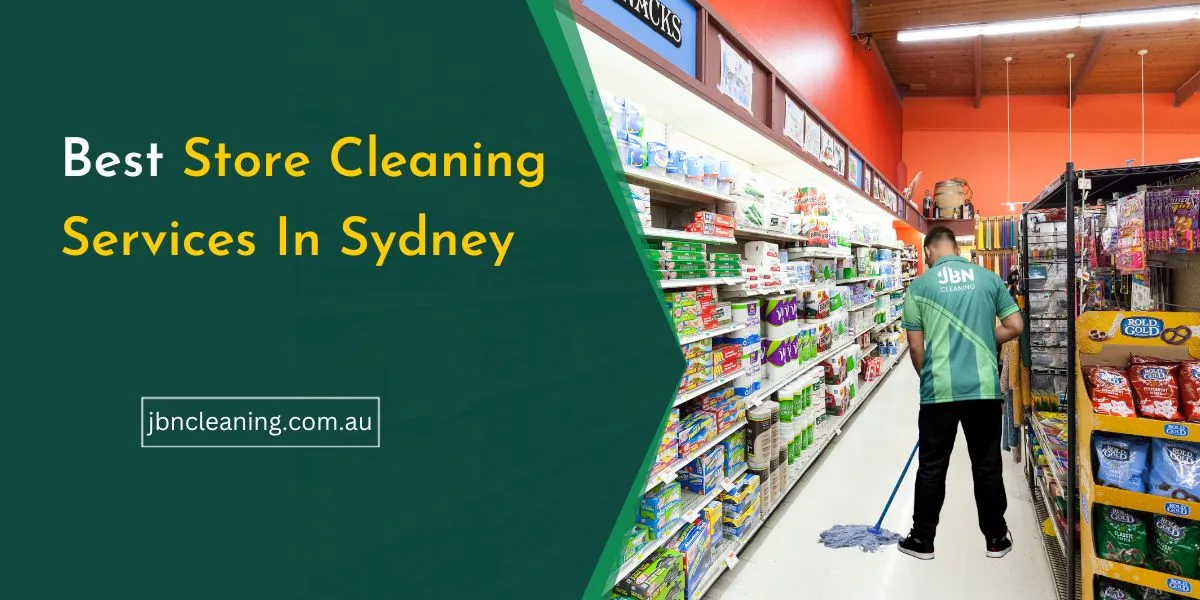
Professional Store Cleaning Services In Sydney Your store of any nature must be presentably attractive to any potential…
Explore Best Store Cleaning Services In Sydney
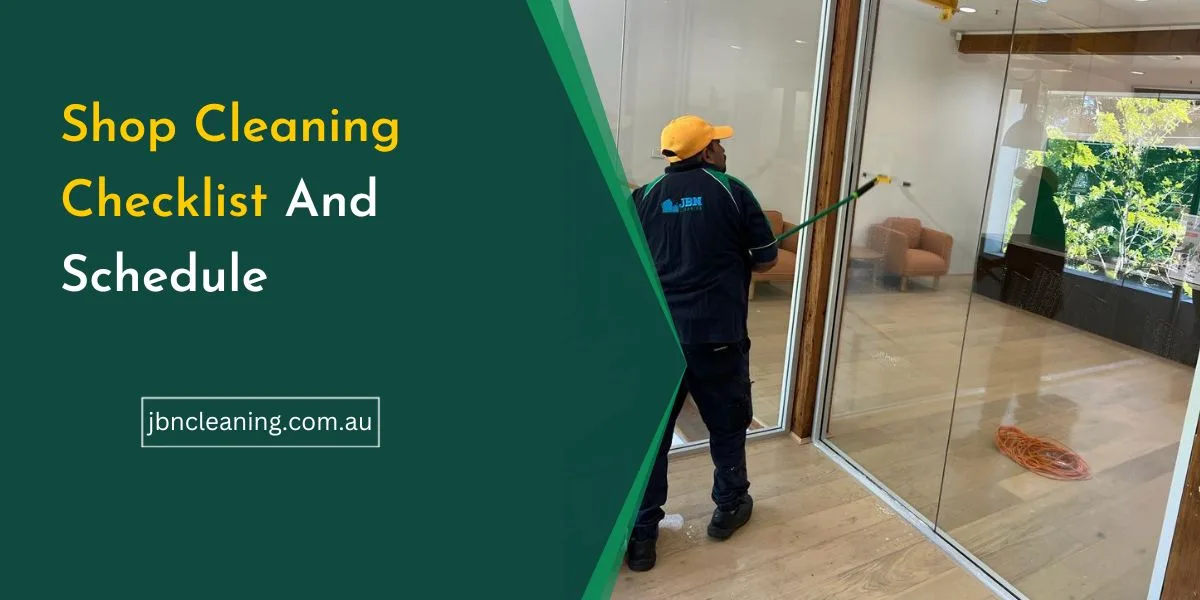
Comprehensive Shop Cleaning Checklist You Should Follow for a Thorough Cleanup In the retail business, cleanliness serves both…
Explore Shop Cleaning Checklist And Schedule
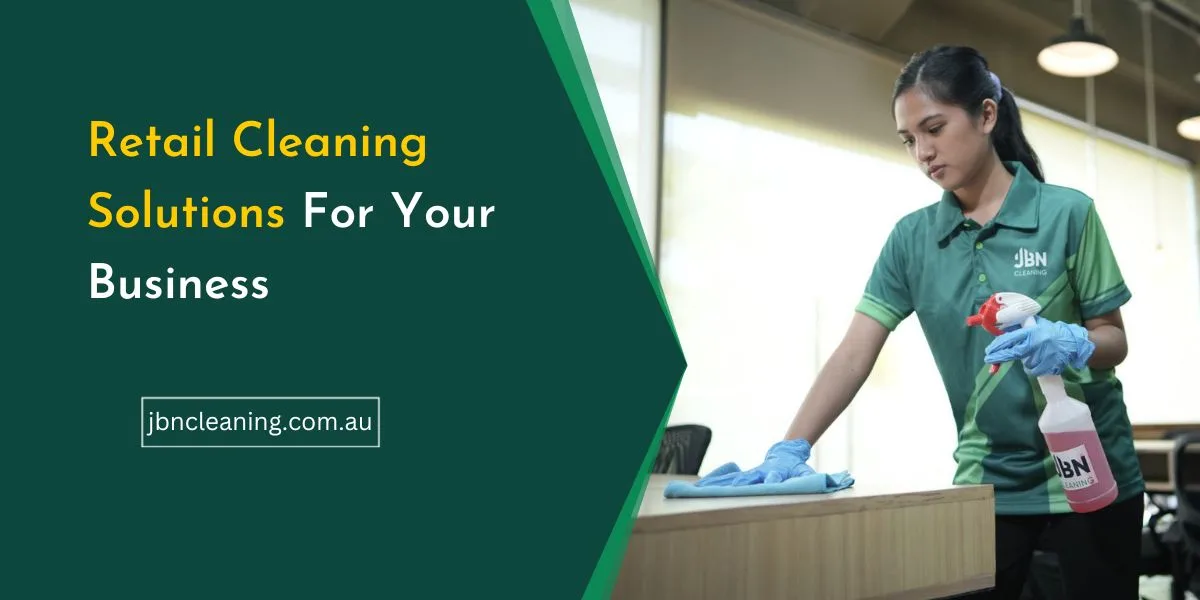
Retail Cleaning Solutions Can Take Your Sales To Next Level Yes, you read that right. Retail cleaning solutions…
Explore Retail Cleaning Solutions For Your Business
Best Retail Cleaning Checklist Shopping is more like a favorite pastime for a lot of people. The cleaner…
Explore Best Retail Cleaning Checklist
We have a range of commercial cleaning services that can cover any cleaning requirement of yours. Check our offerings here!
Make way to a productive workspace that is lean, safe, and completely hygienic with JBN Cleaning.
Commercial CleaningBoost your employee productivity multiple times by cleaning every corner there is to perfection.
Office CleaningClean everything from your panes to the exteriors and interiors altogether with our expert services.
Window CleaningCareful, thorough cleaning for all your sensitive requirements. We’ve got your back!
Childcare Cleaning