Strata Cleaning Company Sydney: 10 Questions to Ask
Ten Questions To Ask Before You Hire A Strata Cleaning Company In Sydney Hiring a cleaner for a…
Explore Strata Cleaning Company Sydney: 10 Questions to Ask
Strata cleaning is the recurring cleaning of the common property of a strata-titled building — the lobby and entry, corridors and stairwells, lift cars and lift lobbies, bin rooms and waste chutes, car parks and driveways, mailrooms, and shared amenities such as a pool surround, gym or rooftop terrace. It stops at the lot boundary. What is inside an owner’s or a tenant’s lot is theirs, not the contract’s.
In New South Wales that boundary is not a matter of preference. The Strata Schemes Management Act 2015 (NSW) makes the owners corporation responsible for maintaining and keeping in a state of good and serviceable repair the common property of the scheme. The cleaning contract is one of the ways that duty is met, which is why a strata scope is written against common property and the scheme’s by-laws rather than against a floor plan.
It also changes who the client is. The person who signs is the owners corporation, usually acting through a strata managing agent, and the people who notice the work are residents who did not choose the cleaner. That gap is the whole job.
JBN Cleaning services strata buildings across the Sydney metropolitan area from our base in Pendle Hill, with the closest coverage through the western and inner-western corridors.

A strata cleaning schedule covers the entry and lobby, corridors and stairwells, lift cars including the door tracks, the bin room, the car park and driveway, and shared amenities such as a pool surround or gym. Carpet extraction, pressure washing and high dusting run quarterly or annually and are priced as separate lines.
A strata scope is written area by area, because a building is a set of very different rooms with very different traffic.
Entry and lobby. Glass doors and entry glazing, intercom panel, mailbox bank, entry matting, floor mopped or vacuumed, and the first impression that every resident and visitor forms in about four seconds.
Corridors and stairwells. Carpet vacuumed or hard floors mopped, skirtings and handrails wiped, fire stair landings cleared and swept, light fittings and emergency signage dusted on a cycle.
Lifts. Car floors, walls, mirrors and stainless panels, and the door tracks — the last of which is the detail that separates a cleaner who knows lifts from one who does not, because that is where the grit sits.
Bin room and waste. Floors hosed or mopped, bins moved out and back on collection days where that is in the contract, chute openings wiped, and the room deodorised. In most Sydney buildings this is the single largest source of resident complaints, and it is worth scoping properly rather than cheaply.
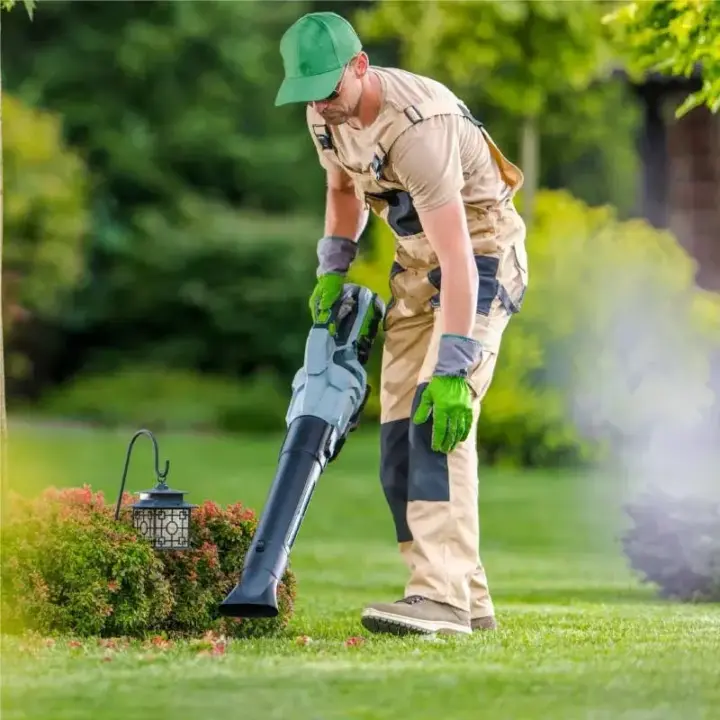
Car park and driveway. Sweeping or blowing of the hardstand, cobweb removal, attention to oil spotting where it can be treated, and the ramp and entry apron kept clear.
Amenities. Pool surrounds, gym, rooftop or barbecue areas, and any shared laundry — each on its own frequency, because a gym used daily is not a barbecue terrace used in summer.
Periodic. Carpet extraction in corridors, pressure washing of the entry and bin room, high dusting, and external ground-floor glass. These sit on a quarterly or annual cycle and should be priced as their own lines so the committee can see what it is approving.
The contract covers common property only, area by area, with periodic work priced as separate lines for the committee.
| Area | Task | How often |
|---|---|---|
| Entry and lobby | Entry doors and glazing, intercom panel and mailbox bank wiped | Each visit |
| Entry and lobby | Entry matting cleaned, floor mopped or vacuumed | Each visit |
| Corridors and stairwells | Carpet vacuumed or hard floors mopped | Each visit |
| Corridors and stairwells | Skirtings and handrails wiped | Each visit |
| Corridors and stairwells | Fire stair landings cleared and swept | Each visit |
| Corridors and stairwells | Light fittings and emergency signage dusted | On a set cycle |
| Lifts | Car floors, walls, mirrors and stainless panels cleaned | Each visit |
| Lifts | Door tracks cleared of grit | Each visit |
| Bin room and waste | Floor hosed or mopped, chute openings wiped, room deodorised | Each visit |
| Bin room and waste | Bins moved out and back | Collection days, where in the contract |
| Car park and driveway | Hardstand swept or blown, cobwebs removed, ramp and entry apron kept clear | On the agreed cycle |
| Car park and driveway | Oil spotting treated where it can be | On the agreed cycle |
| Shared amenities | Pool surround, gym, rooftop or barbecue area, shared laundry | Each on its own frequency |
| Periodic | Corridor and lobby carpet extraction | Quarterly or annually |
| Periodic | Pressure washing of the entry and bin room | Quarterly or annually |
| Periodic | High dusting and external ground-floor glass | Quarterly or annually |
| Reporting | Written report: areas attended, periodic items done, issues for owners | Each reporting period |
| Not included | Inside lots, balconies, courtyards and exclusive-use areas | Only if the owners corporation adds them |
A strata cleaning contract stops at common property as the scheme defines it, and the owners corporation decides anything beyond that. Balconies, courtyards, the inside of lots and exclusive-use areas are outside the contract unless the owners corporation adds and pays for them. The scheme's by-laws also set hours, bin movement, water use and contractor access.
The most expensive misunderstanding in strata cleaning is scope creep across the lot boundary. A resident asks the cleaner to do something inside their lot, the cleaner obliges, and now there is an expectation nobody approved and nobody is paying for.
We scope against common property as the scheme defines it, and we say so in writing. Balconies, courtyards, the inside of a lot and anything on an owner’s exclusive-use area are outside the contract unless the owners corporation has specifically added them and is paying for them.
The scheme’s by-laws matter as much as the boundary. By-laws commonly govern when bins may be moved, whether hosing down a car park is permitted given water restrictions and drainage, what noise is allowed before a stated hour, and how contractors access the building. A cleaner who has not read the by-laws will eventually breach one, and it is the owners corporation that wears it.
Access is its own conversation. Most buildings issue a fob or key with a register against it, and some require the cleaner to sign in through a building manager. We keep a record of what we hold and return it when a contract ends, which sounds obvious until a scheme changes cleaners and discovers nobody knows how many fobs are still out there.
Strata cleaning is reported in writing against the scope: the areas attended, the periodic items done that period, and anything an owner needs to know about, such as a stairwell light out or a fire door propped open. Reports are written so the strata manager can attach them to minutes, or entered into the scheme's own platform.
A strata contract has an audience the cleaner never meets. The strata manager has to answer to a committee, the committee has to answer to owners at a general meeting, and none of them were on site at 6am.
So the work has to produce something written. We report against the scope rather than in general terms — the areas attended, the periodic items completed that period, and anything found that is not a cleaning matter but needs an owner’s attention: a light out in a stairwell, a leaking tap in the bin room, graffiti on the entry, a fire door propped open. That last category is often the most valuable part of the report, because the cleaner is the only person who walks every common area of the building several times a week.
Reports are written so they can be attached to minutes or forwarded to owners without being rewritten first. If your scheme has a preferred format or a building management platform it already uses, we will report into that rather than asking the manager to translate ours.
When something is missed, there is a named contact, a route to report it, and a stated window to put it right. For a scheme, that route matters more than any promise about standards, because it is the thing the manager can point to in a meeting.
Strata cleaning in NSW has three layers: the Strata Schemes Management Act 2015 (NSW), which puts common property maintenance on the owners corporation; the Work Health and Safety Act 2011 (NSW) and Regulation 2017, regulated by SafeWork NSW, which cover the cleaning work; and the scheme's own by-laws on hours, access, waste and water use.
Three layers apply at once.
The Strata Schemes Management Act 2015 (NSW) puts the duty to maintain and repair common property on the owners corporation. Cleaning is part of how that duty is discharged, and it is the reason the contract is scoped to common property boundaries.
The Work Health and Safety Act 2011 (NSW) and the Work Health and Safety Regulation 2017, regulated by SafeWork NSW, cover the cleaning work itself. Residents use a lobby at all hours, so wet floors are signed and the signs stay up until the floor is dry; chemicals carry current Safety Data Sheets and are stored in a locked area rather than an open bin room; electrical equipment is tested and tagged; and work at height — light fittings, high glazing, cobwebbing above a stairwell — is planned rather than improvised. Safe Work Australia publishes the model codes these obligations draw on.
The scheme’s own by-laws sit over the top, covering hours, access, waste handling and water use.
Our cleaners are police-checked, which matters more in a residential building than almost anywhere else, because they hold access to a place where people live. We carry public liability insurance and can provide our certificate of currency to the strata manager before work begins — most schemes ask for it as a condition of engagement, and it should be current, not expired last quarter.
Strata cleaning is quoted per job. The final price depends on lot count and levels, shared amenities, the waste and bin room arrangement, the car park, and how often the common areas are cleaned. Periodic items like carpet extraction and pressure washing are priced separately so the committee can see each one.
Strata quotes vary more than any other commercial cleaning category, because buildings vary more. What drives the number:
Lot count and levels. More lots means more traffic through the same corridors, and more levels means more stairwell, more lift-lobby and more travel within the building itself.
Amenities. A pool surround, gym, terrace or shared laundry each add their own frequency and their own risk profile. A building with none of them is a substantially cheaper contract than one with all four.
Waste arrangement. A chute and a single bin room is straightforward. Multiple bin rooms, a bin-presentation service on collection days, or a basement bin room reached by a service lift are all real time.
Car park. Size, whether it is swept or blown, and whether there is a ramp and apron exposed to street dirt.
Frequency. Most Sydney schemes run somewhere between twice weekly and five days a week for the main common areas, with the car park and periodic items on a longer cycle.
We quote from a walk-through of the building with the scope written area by area, and the periodic items priced as separate lines. That is deliberate: a committee approving a budget needs to see what the quarterly carpet extraction and the annual pressure wash cost on their own, not buried in a monthly figure.
Choose a strata cleaner whose scope names common property areas and boundaries, who can show you a sample monthly report for the committee, and who keeps a register of keys and fobs. Ask how resident complaints reach the cleaner, and whether periodic items are priced separately. Then check their certificate of currency and police checks.
Questions that separate strata quotes quickly:
Is the scope written against common property? If the quote describes “the building” rather than named areas with boundaries, you will be arguing about balconies within a year.
What do we get in writing each month? A scheme needs something that can go to a committee. Ask to see a sample report before you sign.
Who attends, and do they hold keys? Continuity matters in a residential building because residents recognise the person and because access is controlled. Ask how keys and fobs are registered and returned.
How are resident complaints handled? Residents complain to the strata manager, not the cleaner. The route from a resident’s email to the cleaner actually fixing it should be short and named.
Are the periodic items priced separately? A single all-in monthly figure hides whether the annual pressure wash is actually funded.
Then the basics: an ABN, a current certificate of currency for public liability, police-checked staff, and a contactable office.
Sydney strata schemes most often add corridor and lobby carpet extraction, lobby and reachable external window cleaning, and periodic deep cleans of bin rooms, car parks and stairwells. Commercial lots at ground level arrange their own office or retail cleaning, because the owners corporation contract stops at their door.
Beyond the recurring common property contract, schemes commonly engage us for:
Where a scheme includes commercial lots at ground level, those tenancies arrange their own office or retail cleaning separately — the owners corporation contract stops at their door.
See the full range of commercial cleaning services across Sydney.
What strata managers, building managers and committee members ask us before a contract starts.
Common property: lobby and entry, corridors, stairwells, lift cars and lobbies, bin rooms, car parks and driveways, mailrooms, and shared amenities such as a pool surround, gym or terrace. It stops at the lot boundary — the inside of a lot, balconies and exclusive-use areas are outside the contract unless the owners corporation adds them.
Yes. We report against the written scope — areas attended, periodic items completed, and anything found that needs an owner’s attention, such as a stairwell light out or a fire door propped open. It is written so the strata manager can attach it to minutes without rewriting it.
We carry public liability insurance and provide our certificate of currency to the strata manager before work begins. Most schemes require it as a condition of engagement.
We keep a register of every key and fob issued to us, who holds it, and we return the full set when a contract ends. Ask any prospective cleaner how they do this — schemes routinely discover at changeover that nobody knows how many fobs are still out.
It depends on lot count and traffic rather than a rule. Most Sydney schemes run the main common areas between twice a week and five days a week, with car parks, carpet extraction and pressure washing on a longer cycle. We recommend a frequency after walking the building, not before.
The owners corporation, normally through the strata managing agent or the building manager. Residents can flag something to us and we will pass it on, but a change to the scope comes from the client who signed it.
Yes. In a residential building the cleaner holds access to a place where people live, so this matters more here than almost anywhere else. We keep those records on file.
Usually, depending on how far the building is from our other work that day. Call your named contact rather than emailing, tell us what has happened, and we will tell you honestly when we can be there rather than promising a time we cannot hold.
Ten Questions To Ask Before You Hire A Strata Cleaning Company In Sydney Hiring a cleaner for a…
Explore Strata Cleaning Company Sydney: 10 Questions to Ask
Simple Strata Cleaning Tips That Can Take Your Cleaning A Long Way! Strata Cleaning is predominantly an Australian…
Explore Best Strata Cleaning Tips And Tricks
Where You Get Reliable Strata Carpet Cleaning Services In Sydney Looking for a reliable cleaning company to help…
Explore Strata Carpet Cleaning Services In Sydney
Do You Know About Strata Building Cleaning? Now this one refers to the cleaning module that covers the…
Explore Strata Building Cleaning Services In Sydney
Wondering About Your Strata Cleaning Cost? As a building owner, it’d be a great idea for you to…
Explore How Much Does Strata Cleaning Cost?
Strata Cleaning Services Can Save The Day For You! Are you a business owner with a common area…
Explore What Are The Advantages of Timely Strata Cleaning?
What is Strata Cleaning? Strata cleaning has become one of the buzzwords in and around the world used…
Explore What Is Strata Cleaning?
What Is Involved In The Strata Cleaning Checklist? Strata cleaning is predominantly an Australian concept that originated here.…
Explore What Should Your Strata Cleaning Checklist Involve?
We have a range of commercial cleaning services that can cover any cleaning requirement of yours. Check our offerings here!
Make way to a productive workspace that is lean, safe, and completely hygienic with JBN Cleaning.
Commercial CleaningBoost your employee productivity multiple times by cleaning every corner there is to perfection.
Office CleaningClean everything from your panes to the exteriors and interiors altogether with our expert services.
Window CleaningCareful, thorough cleaning for all your sensitive requirements. We’ve got your back!
Childcare Cleaning