
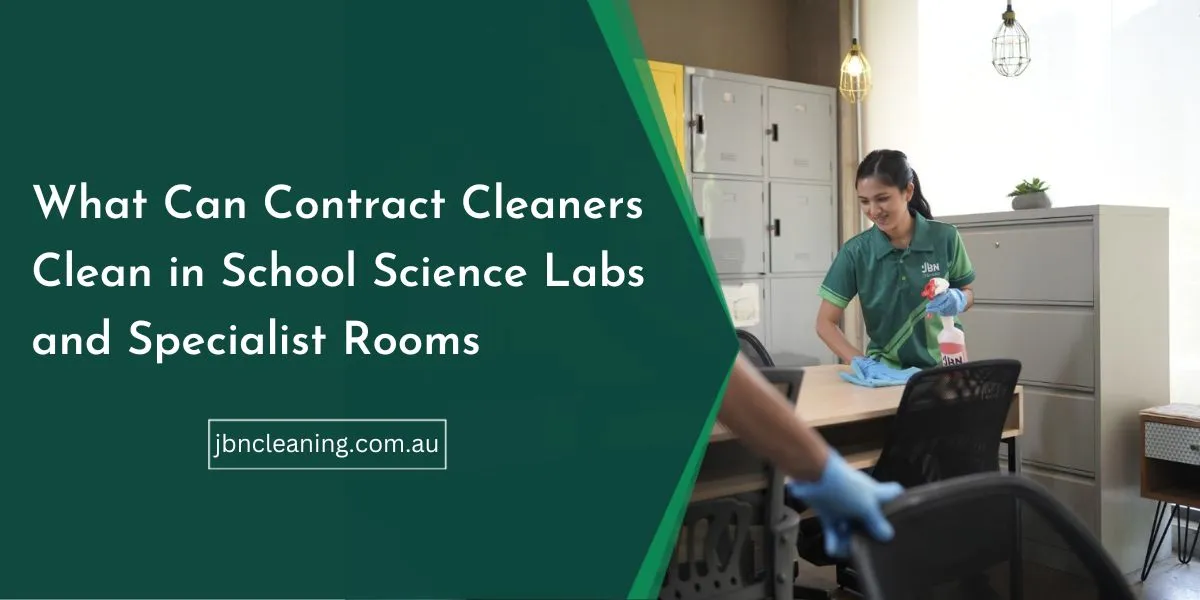
Contract cleaners can clean the general areas of a school science lab, the floors, cleared bench tops, sinks, general waste bins, windows, boards and high-touch points, but not the hazardous or specialist items. Chemicals, chemical and biological spills, fume cupboards, specialist equipment and lab waste are left to lab technicians and teachers. The line is about safety and liability, not effort, and the same principle applies across other specialist rooms. This guide sets out exactly what a cleaner can and cannot touch as part of school cleaning in Sydney, and how to set a scope that keeps everyone safe.
What Can Contract Cleaners Clean in a Science Lab?
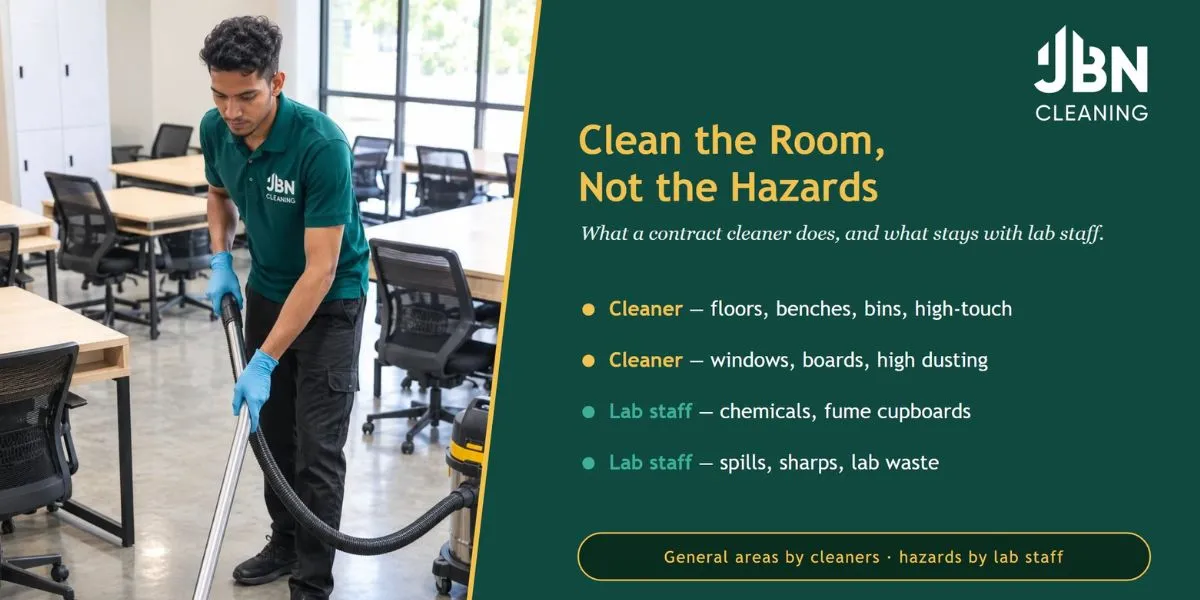
The everyday cleaning of a science lab is the same as any classroom, and it is the contract cleaner’s job. That covers vacuuming and mopping floors, wiping down cleared bench tops and sinks that are free of chemicals, emptying general waste bins, cleaning windows and boards, and disinfecting high-touch points like door handles, light switches and taps. Keeping these areas clean matters just as much here as anywhere else in the school, because a lab is still a room full of students every day. The key word is cleared: a cleaner wipes a bench that has been left empty, not one covered in equipment or chemicals. Periodic deep work belongs to the contract cleaner too: floor stripping and sealing, high dusting and window cleaning, usually scheduled in the school holidays, because none of it involves the hazardous materials.
What Should Be Left to Lab Staff?
Anything hazardous or specialist stays with the lab technician or the teacher, who are trained for it. That means chemicals and chemical storage, the inside of fume cupboards, specialist equipment such as microscopes, Bunsen burners, glassware and electronics, and the preparation room. It also means any spill of a chemical or biological material, and the disposal of lab waste, sharps and broken glass, which follow strict procedures a general cleaner is not trained in. A contract cleaner who finds a spill or hazard should report it, not clean it, so the right person deals with it safely.
Who Cleans What?
The simplest way to avoid confusion is a clear split, agreed in writing. The table below shows how the work usually divides.
| Task or item | Contract cleaner | Lab staff (technician or teacher) |
|---|---|---|
| Floors, cleared benches, sinks, general bins, windows, high-touch points | Yes | Not required |
| Chemicals, chemical storage and the prep room | No | Yes |
| Chemical or biological spills | No, report it | Yes |
| Fume cupboards, specialist equipment and glassware | No | Yes |
| Sharps, broken glass and lab waste | No, report it | Yes |
Agreeing this split upfront means nothing hazardous is touched by mistake and nothing general is missed because each side assumed the other had it.
What About Other Specialist Rooms?
The same thinking applies beyond the science lab. In design and technology workshops, art rooms, food technology kitchens and computer labs, a contract cleaner handles the general space, the floors, benches, sinks and bins, while machinery, kilns, tools, cooking equipment and sensitive electronics are left to the staff who run them. The rule across every specialist room is the same: clean the room, not the specialist equipment or the hazards, unless a trained person has made it safe and asked for it. Getting this right protects expensive equipment from accidental damage as much as it protects people from harm.
How Do You Set the Scope Safely?
A good school cleaning arrangement is built on a clear, written scope and a proper handover. The cleaner should be inducted on the school’s chemical management and safety policy, know which rooms and cupboards are off limits, and understand how to report a hazard. Each school sets its own child protection and sign-in rules for contractors, so confirm these before the first visit. Most lab cleaning is done after hours, when students and staff have left. A short checklist on the wall, showing what the cleaner does and what stays with lab staff, keeps it clear for every regular and casual cleaner. Set up this way, the school gets a clean, safe lab without the cleaner ever going near something they should not.
Frequently Asked Questions
Should contract cleaners clean school science labs?
Yes, for the general areas, floors, cleared benches, sinks, bins and high-touch points. The hazardous and specialist work, including chemicals and equipment, stays with lab technicians and teachers.
Who cleans school science labs?
It is shared. Contract cleaners handle the everyday cleaning of the room, while lab technicians and teachers deal with chemicals, specialist equipment, spills and lab waste.
What can school cleaners clean in a science lab?
Floors, cleared bench tops, sinks free of chemicals, general waste bins, windows, boards and high-touch points, the same general cleaning they do in any classroom.
Can a cleaner clean up a chemical spill in a lab?
No. Chemical and biological spills follow strict procedures and are handled by trained lab staff. A cleaner who finds one should report it, not clean it.
Do school cleaners need special checks?
Each school sets its own requirements for contractors. Cleaners should be police-checked and inducted on the school’s safety and chemical policies before they start.
Book School Cleaning in Sydney
A science lab can be kept clean and safe when the cleaning scope is clear and the right people handle the right tasks. JBN Cleaning provides a school cleaning service across Sydney with police-checked crews inducted on your safety and chemical policies, cleaning the general areas of labs and specialist rooms to an agreed scope while your lab staff keep the hazards. See our school cleaning page, or call 1300 908 678 or 02 9188 5449, or email info@jbncleaning.com.au for a free, no-obligation quote.
