
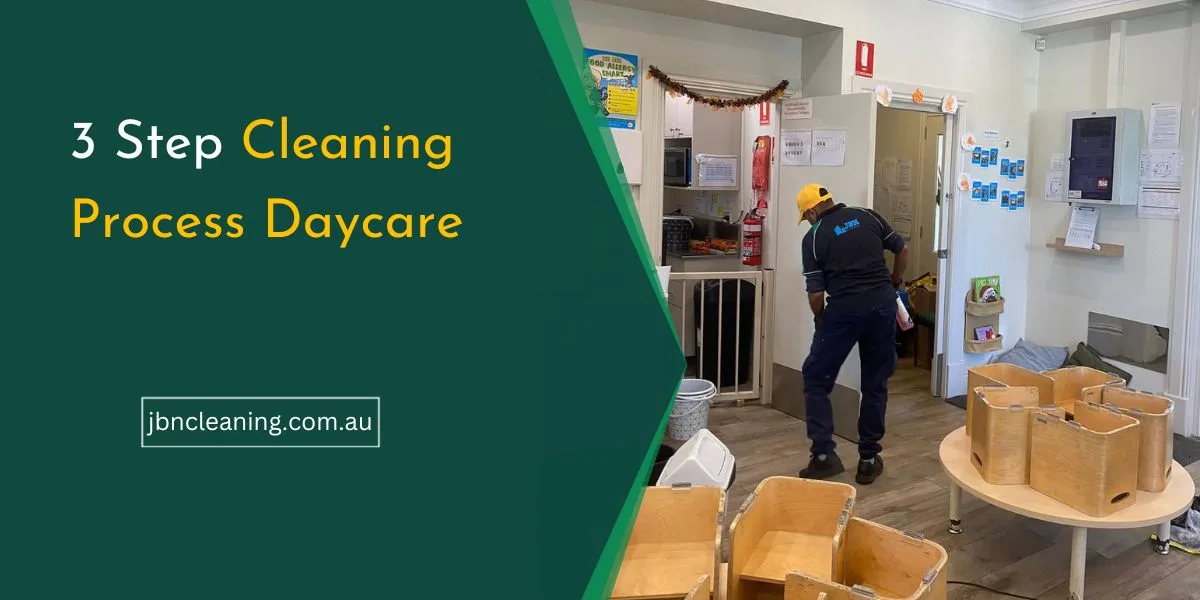
A Complete Guide To The 3-Step Daycare Cleaning Process
When it comes to protecting children’s health and safety, maintaining cleanliness in a Childcare centre is essential. One of the most crucial duties for anyone working in a childcare centre is to keep the daycare hygienic and germ-free. This is particularly true for childcare facilities, where young children spend a large portion of their time. You may make sure that the entire facility is clear of dangerous germs and potential hazards by following certain helpful tips. Cleaning a childcare centre is a vital task for those in charge of it. Every child entrusted to their care must be safe and hygienic in the centre.
One of the best ways to achieve this is by following the 3-step cleaning process daycare centres rely on. This method is a widely adopted and scientifically proven method that helps in reducing the harmful germs effectively. It goes beyond simple tidying up, breaking down the cleaning task into three crucial phases: cleaning, disinfecting, and sanitising.
Explore The 3-Step Daycare Cleaning Process
The 3-step cleaning process daycare centres use is a methodical approach that involves three critical stages. Each step serves a unique purpose, and together they form a comprehensive defence against germs. This systematic routine is an essential part of professional childcare cleaning services, helping to maintain a safe, healthy, and hygienic environment for children and staff alike.
- Cleaning
- Disinfecting
- Sanitising
This process is especially important in childcare environments because kids share toys, furniture, and play areas closely. Without a proper system, germs can spread rapidly, leading to common illnesses like colds, flu, and stomach bugs.
Cleaning
The first step in the 3 step cleaning process daycare providers follow is cleaning. It involves physically removing dirt, dust, and debris from surfaces. This is the foundation because dirt and grime can shield germs from disinfectants.
In daycares, cleaning means wiping down tables, chairs, toys, door handles, floors, and diaper changing areas. Staff use soap and water or specially designed cleaning agents safe for children. The goal is to break down the barrier that dirt forms, so disinfectants can work more effectively in the next step.
Cleaning alone doesn’t kill germs, but it’s necessary to expose them and prepare surfaces for disinfection. Effective cleaning tools, such as microfiber cloths, help trap particles rather than spreading them around.
Disinfecting
After surfaces are cleaned, the second step is disinfecting, which kills most of the harmful germs and bacteria. This step is critical, daycare centres adopt it because children often touch the same objects and surfaces repeatedly.
Disinfectants used must be safe for children but strong enough to eliminate viruses, bacteria, and fungi. Areas that receive special attention include toys, tabletops, bathroom fixtures, and door handles.
An important aspect of disinfecting is adhering to the correct “dwell time”, the amount of time a surface must remain wet with the disinfectant to be effective. Staff members are trained to follow product instructions carefully to ensure germs are properly eliminated.
Disinfecting interrupts the transmission of illnesses common in daycares, reducing the risk of outbreaks.
Sanitising
The final phase in the daycare routine is sanitising. While disinfecting kills most germs, sanitising reduces the number of remaining microbes on surfaces to a safe level, especially important on toys and items children frequently handle or put in their mouths.
Sanitisers tend to be gentler than disinfectants, making them suitable for food preparation areas, utensils, and play objects. This last step reassures caregivers and parents that the environment is not just clean but hygienically safe.
Common sanitising agents include diluted bleach solutions or approved sanitising sprays, all selected with children’s health in mind.
Benefits Of The 3-Step Daycare Cleaning Process
A daycare that consistently applies the 3 step cleaning process daycare is healthier for children and staff alike. This thorough cleaning routine decreases absenteeism due to illness, fosters a safer play and learning environment, and builds parents’ trust in the facility’s care standards.
- Reduces illness and absenteeism among children and staff.
- Creates a safer, healthier play and learning environment.
- Builds parents’ trust in the facility’s care standards.
- Supports children’s growth by minimising sickness-related disruptions.
- Improves staff well-being and productivity.
These standards are essential, especially when choosing a commercial cleaning in Sydney provider that understands the sensitive nature of childcare environments and can implement this routine effectively.
Why Daycare Cleaning Needs Special Attention?
Daycares are unique spaces. Unlike offices or retail stores, they’re full of little humans with developing immune systems. They’re curious, adventurous, and they are often messy. From sticky fingers to diaper accidents, the cleaning demands in a daycare are on a whole different level.
Not only that, childcare cleaning is essential because kids in these environments tend to share everything—from toys and snacks to coughs and sneezes. That’s why the daycare cleaning process needs to be thorough, frequent, and focused on both visible and invisible contaminants.
Professional services like JBN Cleaning specialise in applying such child-focused cleaning, daycare routines while meeting all regulatory standards.
Importance Of The 3-Step Cleaning Process In Daycare
Maintaining cleanliness in childcare facilities is crucial for both health and safety, not just aesthetics. The three-step cleaning procedure is essential to keeping a clean atmosphere in which kids can flourish. This is why it’s so crucial:
- Prevents the Spread of Germs Creates a Safe and Healthy Environment
- Builds Trust with Parents
- Ensures Compliance with Health Regulations
- Promotes Professionalism and Responsibility
- Supports Children’s Growth and Well-being
Moreover, maintaining high standards of cleanliness through consistent childcare cleaning builds trust with parents, assures compliance with health regulations, and promotes a professional and responsible childcare environment. Ultimately, the 3-step cleaning process plays a crucial role in safeguarding children’s health and supporting their growth in a clean and nurturing setting.
Final Thoughts
The 3 step cleaning process daycare providers rely on, cleaning, disinfecting, and sanitising, is a powerful, effective system designed specifically to reduce germs and protect children in group childcare settings. Its success depends on consistent application, proper staff training, and the use of child-safe products.
When daycares combine this process with good hygiene practices, they create an environment where children can thrive safely and parents feel confident leaving their little ones in trusted care.
