
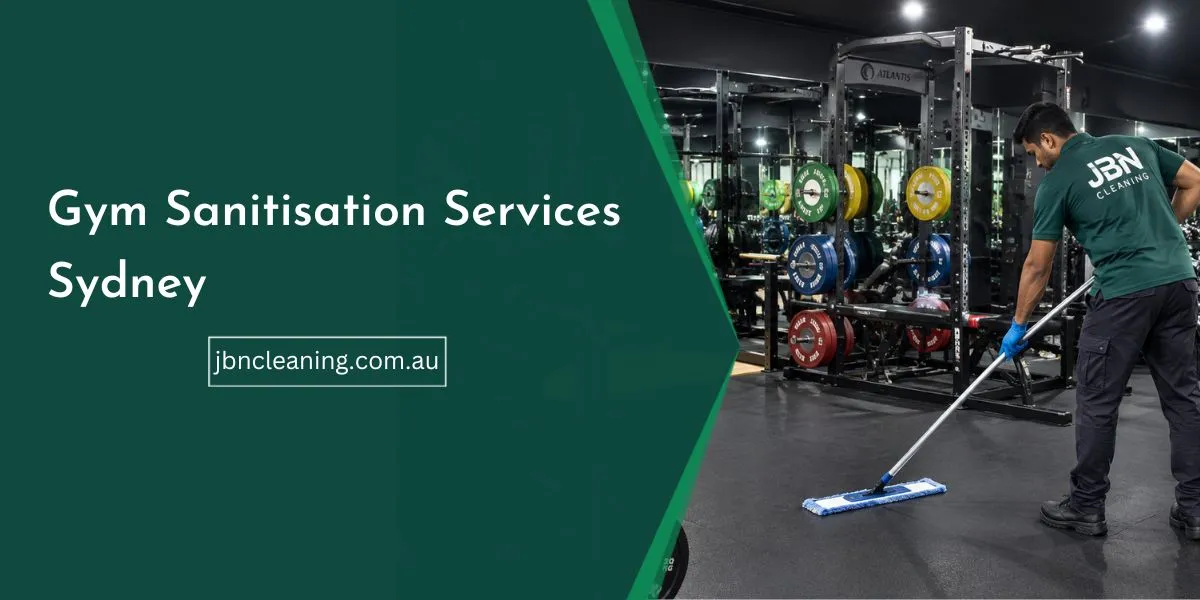
A gym is one of the hardest environments to keep hygienic, because warm, humid air, shared equipment and constant sweat are exactly what bacteria and fungi love. Wiping a bench looks clean, but a gym sanitisation service Sydney members can trust goes further, killing the germs a surface wipe leaves behind. This guide explains why sanitising matters more than ordinary gym cleaning, the zones that carry the most risk, and what genuine gym hygiene services actually involve before you choose a provider.
Sanitising Versus An Ordinary Wipe-Down
Cleaning removes visible dirt. Sanitising reduces the bacteria and viruses that cause illness, and in a gym that difference is the whole game. Members share grips, benches, mats and change rooms all day, and skin infections like staph and tinea, along with colds and flu, spread fast on warm, sweat covered surfaces. A visibly grubby or smelly gym also costs memberships, because hygiene is now one of the first things a prospective member judges.
Good gym cleaning keeps the place tidy, but sanitising is what protects health and reputation, which is why the two should never be treated as the same job. Sweat is acidic too, so left sitting on vinyl and chrome it slowly degrades the equipment itself, which means real hygiene also protects the biggest capital investment in the room.
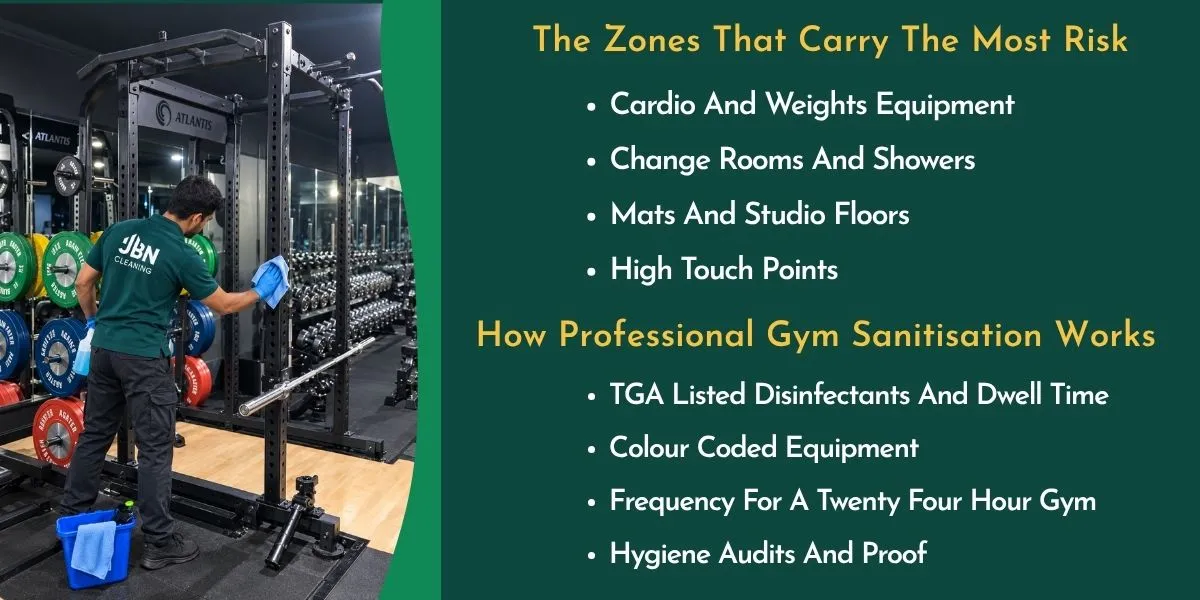
The Zones That Carry The Most Risk
Not every surface is equal. A handful of high contact zones do most of the damage if they are missed, so a sanitising program should be built around them.
| Zone | Sanitise frequency |
|---|---|
| Cardio & weights equipment | Daily (high-touch grips, benches) |
| Change rooms & showers | Daily + deep clean weekly |
| Mats & studio floors | Daily wipe + periodic deep treatment |
| High-touch points (handles, lockers, EFTPOS) | Several times a day |
Cardio And Weights Equipment
Treadmill rails, bike handles, dumbbell grips, benches and machine touchpoints are handled by dozens of sweaty hands a day. A proper gym equipment cleaning service disinfects these contact surfaces, not just the frames, using products that will not corrode the equipment.
Change Rooms And Showers
Wet areas are the biggest hidden risk. Warm, damp showers and change rooms breed mould and fungal infections such as athlete’s foot, so floors, benches, lockers and tiled surfaces need disinfection and proper drying, not just a quick mop. This is the zone members quietly judge a gym on most.
Mats And Studio Floors
Floor work means skin on surface contact, so mats, rubber flooring and studio floors need regular sanitising and periodic deep treatment. Sweat soaks in fast, and a neglected mat is one of the most common sources of gym odour.
High Touch Points
Door handles, locker latches, water fountains, reception counters and eftpos terminals are touched by every member who walks in. These are quick to disinfect and easy to skip, which is exactly why they are worth putting on the checklist.
How Professional Gym Sanitisation Works
The difference between a real sanitising program and a wipe around shows in the method. Alongside routine work, gym deep cleaning services handle the build up that daily cleaning cannot reach.
The Right Disinfectant And Dwell Time
Sanitising only works if the product is right and it is left to sit. A proper provider uses an effective disinfectant and respects the dwell time on the label, rather than spraying and wiping straight off before it has killed anything.
Colour Coded Equipment
Cloths and mops are colour coded so the gear used in bathrooms never touches equipment or studio floors. It is a simple system that stops a clean in one area spreading contamination into another.
Frequency For A Twenty Four Hour Gym
A staffed studio and an unstaffed twenty four hour gym need different rhythms. Reliable gym cleaning services Sydney operators depend on are scheduled around peak times, with high touch zones done daily or more and deep work layered in weekly or monthly. Getting the timing right keeps the gym fresh at its busiest without ever closing the floor.
Hygiene Audits And Proof
A good provider leaves a record. Dated checklists, and increasingly hygiene audits or surface testing, give an operator proof the work was done to standard rather than just a promise it was.
Frequently Asked Questions
What do gyms use to disinfect equipment?
Disinfectants that are safe on equipment surfaces are applied and left for the correct contact time. Household spray and a quick wipe do not achieve real disinfection.
How should gym equipment be sanitised properly?
Wipe off sweat and dirt first, apply the disinfectant, then let it sit for the labelled dwell time before it is wiped or left to dry. Skipping the dwell time is the most common mistake.
How often should a gym be sanitised?
High touch zones need daily sanitising at minimum, more in a busy or twenty four hour gym, with mats, wet areas and floors on a deeper weekly or monthly cycle.
Is sanitising different from a deep clean?
Yes. Daily sanitising controls germs on contact surfaces, while gym deep cleaning services tackle built up grime, mould and odour in floors, grout and equipment that routine work cannot shift.
What does gym sanitisation cost in Sydney?
It depends on the size of the gym, the hours and how often you need service, so a fair quote follows a walkthrough rather than a flat rate.
Related Posts
- What Is The Difference Between Cleaning And Sanitising?
- What Can I Use To Clean Gym Equipment?
- Gym Cleaning Checklist For Fitness Centres
Booking Gym Sanitisation In Sydney
A clean, fresh gym keeps members renewing and staff healthy, and it starts with a provider that sanitises properly rather than just tidying up. JBN Cleaning delivers gym sanitisation and full gym hygiene services across Sydney with trained crews, effective disinfectants and documented checklists, as part of a wider commercial cleaning service across fitness, retail and office sites. As a single commercial cleaning company and cleaning company in Sydney across your whole facility, JBN Cleaning keeps it on one agreement. Call 1300 908 678 or email info@jbncleaning.com.au for a free on site quote.
