
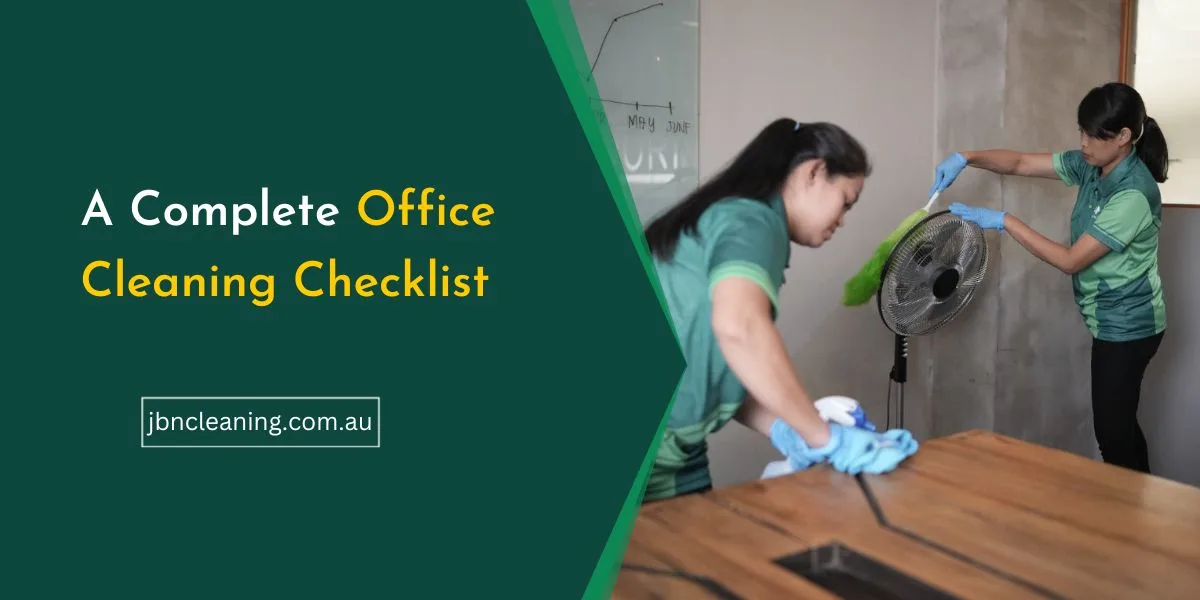
Office Cleaning Checklist: Daily, Weekly and Monthly
Most office cleaning checklists are a list of nice ideas. This one is the actual scope we clean Sydney offices to — organised by how often each task needs doing, and by which part of the office it belongs to.
Use it three ways: to brief an in-house cleaner, to check what your current contractor is actually delivering, or to write a scope before you ask anyone for a quote.
Daily office cleaning checklist
The non-negotiables. If these slip, people notice within a day.
Reception and entry
- Glass doors and entry glass spot-cleaned at hand height
- Reception desk and counter wiped
- Waiting-area seating wiped, cushions straightened
- Entry matting vacuumed
- Bins emptied
Workstations and open plan
- Desks and shared surfaces wiped and sanitised
- Monitors, keyboards, phones and shared peripherals wiped
- Bins emptied, liners replaced
- Traffic-lane carpet vacuumed, including under desks
- Hard floors dust-mopped and spot-mopped
Kitchen and breakout
- Benches, sink and taps cleaned and sanitised
- Microwave and fridge exteriors wiped
- Dishwasher loaded or emptied
- Tables and chairs wiped
- Bins emptied, food waste removed from the building
- Consumables restocked (hand soap, paper towel)
Bathrooms
- Pans, basins, taps and mirrors cleaned and sanitised
- High-touch points disinfected — door handles, locks, flush buttons, dispensers
- Floors mopped with a dedicated bathroom mop
- Consumables restocked — toilet paper, soap, hand towel
- Bins emptied, sanitary units checked
Meeting rooms
- Tables wiped, chairs pushed in
- Whiteboards cleaned
- Cables tidied, remotes and markers returned
- Cups and rubbish removed
Weekly office cleaning checklist
- Full hard-floor mop, edges and corners included
- Skirting boards, window sills and ledges dusted
- Internal partition glass cleaned in full
- Microwave and fridge interiors cleaned out
- Kitchen cupboard fronts and appliance exteriors degreased
- Bathroom tiles and grout lines scrubbed
- Vacuum the full floor area, not just traffic lanes
- Dust low-level fixtures, power points and skirting vents
- Wipe down door frames and light switches
- Lift and clean under loose furniture and bins
Monthly and quarterly
Monthly
- High dusting — tops of partitions, cupboards, picture rails, cable trays
- Air vents and diffusers wiped
- Internal windows cleaned in full
- Upholstered chairs vacuumed
- Storage and utility rooms cleaned
Quarterly
- Carpet steam clean (traffic lanes may need this more often)
- Hard-floor strip and seal, or machine buff
- Workstation screens and fabric partitions cleaned
- Behind and beneath heavy furniture
A weekly cleaning routine for a small office
Under about ten staff, you do not need daily cleaning — you need the right tasks on the right days. A workable weekly routine:
| Day | Tasks |
|---|---|
| Monday | Bins, kitchen, bathrooms, reception reset after the weekend |
| Wednesday | Bins, kitchen, bathrooms, desk surfaces, vacuum traffic lanes |
| Friday | Full clean — all of the above plus mop hard floors, full vacuum, meeting rooms reset, fridge check before the weekend |
Add one weekly deep task on a rotation so nothing goes a month untouched: week 1 internal glass, week 2 skirtings and ledges, week 3 appliance interiors, week 4 high dusting.
Bathrooms and kitchen bins are the two things that cannot be skipped in a small office. Almost every complaint traces back to one of them.
How often should an office be cleaned?
| Your office | Recommended | Why |
|---|---|---|
| Under 10 staff, little kitchen use | 1–2 visits per week | Bins and bathrooms drive frequency, not floor area |
| 10–30 staff, kitchen used daily | 3 visits per week | Kitchen and bathroom hygiene degrade fastest |
| 30+ staff, or client-facing reception | Daily | Reception condition is a commercial signal, not just hygiene |
| Medical, childcare or food handling | Daily, documented sanitising | A regulatory requirement, not a preference |
More detail: how often should an office be cleaned.
Office cleaning audit checklist
How to check the work was actually done, in about five minutes:
- Bathroom high-touch points — run a finger over the flush button and door lock. This is skipped more than anything else.
- Under the desks — vacuuming stops at the traffic lane when someone is rushing.
- Kitchen sink and plughole — wiped benches with a dirty sink means surface-only cleaning.
- Skirtings and corners — dust collects at the edges first.
- Bin liners — replaced, or emptied and reused?
- Glass at hand height — the smudge line on entry doors.
- Consumables — restocked, or left to run out until someone complains?
If three or more fail, the issue is the scope or the time allocated, not the individual cleaner.
What most checklists miss
- Under-desk zones and cable trays — dust reservoirs that never appear on a scope
- Bathroom door handles — cleaned last, with the same cloth used on the pan
- Fridge interiors — nobody owns them until something smells
- Air vents — invisible until they mark the ceiling
- Chair fabric — the dirtiest surface in most offices and rarely on any schedule
Safety and compliance
Cleaning procedures should align with Safe Work Australia guidance and NSW Health requirements for workplace hygiene. In practice that means:
- A safety data sheet available for every chemical used on site
- Colour-coded cloths and mops so bathroom equipment never touches kitchen surfaces
- Wet-floor signage during and after mopping
- A site-specific risk assessment before the first clean
Every JBN cleaner holds a current National Police Check.
Frequently asked questions
What should be on a daily office cleaning checklist?
Bins, bathrooms, kitchen surfaces, desk and shared-surface sanitising, traffic-lane vacuuming and a reception reset. Everything else can run weekly or monthly.
How often should office carpets be cleaned?
Traffic lanes every 6–12 months by hot-water extraction; the full floor annually. High-traffic reception areas may need it more often.
What is the difference between cleaning, sanitising and disinfecting?
Cleaning removes dirt. Sanitising reduces bacteria to a safe level. Disinfecting kills a broader range of organisms and needs the surface to stay wet for a stated contact time — which is why spraying and immediately wiping does very little.
Who should clean the office kitchen?
Contract cleaners handle benches, sink, floors, bins and appliance exteriors. Interiors and personal items are usually left to staff unless written into the scope. Decide this up front — it causes more friction than any other task.
Should the checklist be part of my cleaning contract?
Yes. A scope written into the agreement is the only way to tell whether the work was done. If a cleaner will not put the task list in writing, that tells you something.
See what a full scope covers: what is included in office cleaning, or view our office cleaning services in Sydney.
