
What A Working Church Cleaning Checklist Should Cover
A church is not a normal commercial space, and a generic cleaning checklist will not serve it well. Heritage timber, brass and silver liturgical fittings, stained glass, upholstered pews, carpets in the aisles, and ventilation systems that have been running for decades all live under one roof. The cleaning approach has to respect the materials, the use patterns of the congregation, and the standards a community holds for the place it worships in.
A working church cleaning checklist covers more than the visible spaces. It accounts for hygiene-critical areas like baptismal fonts and communion ware, it sets a sensible frequency for each task, and it builds in periodic deep work like duct and ventilation cleaning that surface-level routines miss. This guide outlines what should be on that list and why.
Why Churches Need A Different Cleaning Approach
Most Australian churches share a few characteristics that change how they should be cleaned:
- Heritage materials — sandstone, polished timber, leadlight, brass — that react badly to harsh chemicals
- Concentrated congregation use one or two days a week, with quieter midweek activity
- Multi-purpose spaces — the same hall hosts services, weddings, funerals, school groups, and community meals
- Older HVAC systems where dust, allergens, and ventilation issues build up gradually
- Volunteer cleaning teams in some parishes, professional cleaners in others, often a mix
A solid church duct cleaning services reflects all of those realities, not just the high-traffic Sunday morning state of the building.
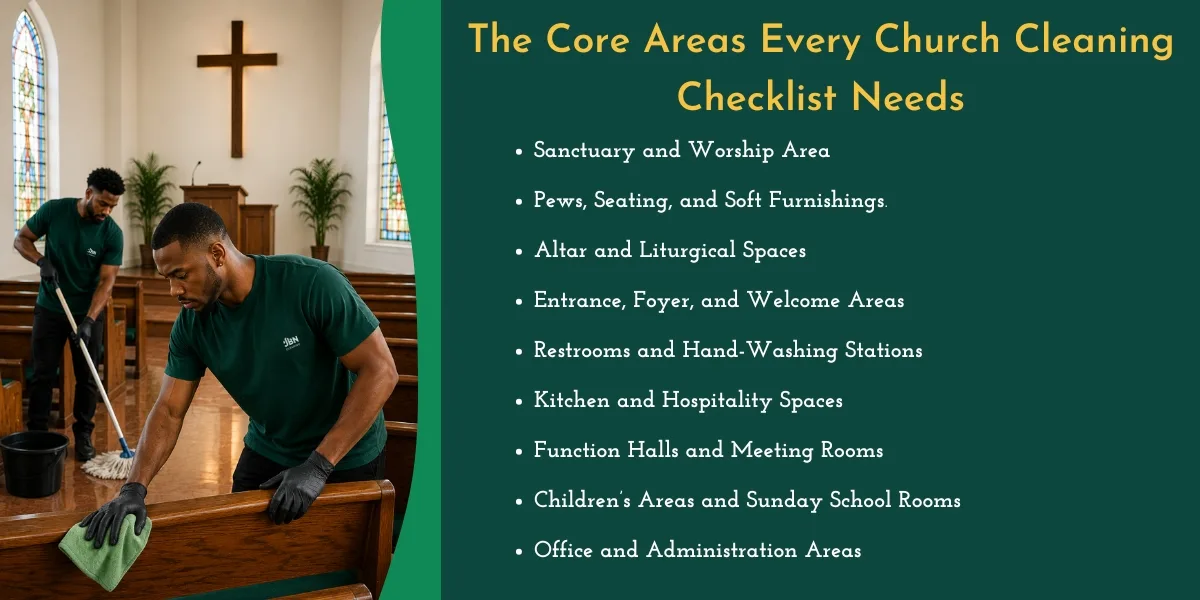
The Core Areas Every Church Cleaning Checklist Needs
Sanctuary And Worship Area
Vacuum and spot-clean carpet aisles. Dust pulpit, lectern, and any raised platforms. Wipe down the underside of pews where dust collects. Polish brass and silver fittings using cloths and products approved for those metals (not multi-purpose sprays). Clean stained-glass windows with the appropriate non-streaking solution — never abrasive cleaners.
Pews, Seating, and Soft Furnishings
Wipe pew surfaces with a damp cloth and a gentle product. For upholstered pews and kneelers, vacuum thoroughly and spot-treat marks. Hymn-book covers, prayer cards, and offertory plates are high-touch and often missed — they should be on the weekly list. Vacuum or steam clean upholstered chairs in side chapels or function spaces.
Altar and Liturgical Spaces
The altar, credence table, communion rails, and tabernacle area need careful, low-chemical cleaning. Communion ware and chalices have their own cleaning protocols handled by clergy or sacristans, but the surrounding furniture and floor need attention from the cleaning team. Linen and altar cloths are usually managed separately, but the cleaning checklist should note the schedule.
Entrance, Foyer, and Welcome Areas
Entry mats vacuumed and rotated. Door handles and push plates disinfected on every visit — these are the highest-touch surfaces in the building. Glass doors cleaned streak-free. Notice boards dusted, brochures and bulletin boards reorganised. Welcome desk and visitor sign-in areas were wiped down.
Restrooms and Hand-Washing Stations
Toilets, basins, mirrors, floors, and fixtures are cleaned with appropriate disinfectants. Restocked with paper, soap, and sanitiser. Sanitary disposal serviced. Handles, locks, and switches sanitised with proper contact time, not just wiped. After major events (weddings, funerals, large services), restrooms need a deeper reset before the next gathering.
Kitchen and Hospitality Spaces
Benches, sinks, splashbacks, and food-preparation surfaces sanitised after each event use. Fridges, freezers, microwaves, urns, and tea-coffee stations cleaned on a schedule. Dishwashers are checked and run. Bins emptied, recycling streams handled. Floors mopped — kitchens get traffic the rest of the week between Sunday morning teas and weekday gatherings.
Function Halls and Meeting Rooms
Floors were swept and mopped after events. Tables and chairs were wiped down and reset. Stage areas cleaned. Audio-visual cabinets dusted. Spills on carpets treated promptly so they do not set. After big events — christenings, funerals, parish dinners — a full reset is on the checklist before the next booking.
Children’s Areas and Sunday School Rooms
Toys sanitised with child-safe disinfectants. Play surfaces wiped multiple times during use periods. Carpets vacuumed thoroughly and spot-treated. Craft tables, chairs, and shelving were wiped down. Bins emptied. Anything visibly soiled is removed for proper laundering or replacement.
Office and Administration Areas
Pastors’, parish administrators’, and treasurers’ offices need the same standard of office cleaning services that any commercial workplace gets. Desks wiped, keyboards and phones disinfected, bins emptied, floors vacuumed or mopped, and kitchenettes cleaned. Confidential paperwork stays untouched — the cleaning team does not move documents.
Frequently Asked Questions
Should our church use volunteers or hire professional cleaners?
A mix works well for many parishes. Volunteers can manage week-to-week tidying, while a professional team handles deep cleans, restrooms, kitchens, and specialist tasks like duct cleaning, brass work, and post-event resets. The split depends on parish size, volunteer availability, and budget.
How often should a church have its ducts cleaned?
Every 1–3 years for most churches, depending on building age, HVAC system condition, occupancy size, and the local pollen and dust environment. Older buildings near tree-lined streets or with original 1960–1980s ductwork generally need more frequent attention.
What products are safe for heritage church surfaces?
Mild, pH-neutral cleaners on most surfaces. Specialist products for brass, silver, leadlight, sandstone, and aged timber. Avoid abrasive scrubs, high-acid cleaners, and ammonia-based products on heritage materials — they can cause permanent damage that is far more expensive to undo than to prevent.
How do we handle cleaning around scheduled services?
Most professional cleaning of churches happens midweek — Tuesday or Wednesday is common — when the building is between services and before booked events. Major deep cleans are scheduled around the church calendar, with extra effort before Christmas, Easter, and major liturgical seasons.
Final Thoughts
A worthwhile answer to what should be included in a church cleaning goes beyond surfaces and frequencies. It accounts for the materials in the building, the rhythms of the congregation, and the periodic deep work that keeps the place healthy for the people inside it. Duct cleaning, brass care, upholstery treatment, and proper sanitisation of children’s spaces all sit alongside the weekly vacuum and pew wipe-down on a checklist that actually serves the parish.
The churches that look and feel cared for are not the ones with the longest checklist on paper. They are the ones where the checklist matches the building, the people use it consistently, and the deep cleaning happens on a proper schedule before small issues become costly problems. Working with a trusted commercial cleaning company like JBN Cleaning helps churches maintain clean, welcoming spaces that feel cared for every day.
