
Supermarket Cleaning Checklist that Improves Customer Experience
Cleanliness plays a direct role in how customers judge a supermarket. Shoppers expect clean floors, sanitised shelves, fresh-smelling aisles, and hygienic food-handling areas. A well-maintained store reduces health risks, supports food safety standards, and creates a safe, compliant shopping environment aligned with Australian hygiene expectations.
Strong hygiene standards also reflect expertise and experience in supermarket operations. Businesses that follow a free supermarket cleaning checklist or a structured checklist for supermarket and commercial cleaning demonstrate control, accountability, and industry knowledge. Backed by trained staff, documented procedures, and proven cleaning systems, consistent hygiene builds customer trust, supports repeat visits, and strengthens long-term brand credibility.
1. Entrance & Parking Area
The entrance and parking area form the first impression of your supermarket. Clean, well-maintained outdoor spaces signal professionalism, safety, and attention to hygiene before customers even step inside.
Why This Area Matters
Customers judge store cleanliness immediately upon arrival. Dirty entrances, littered parking bays, or stained walkways reduce trust and can discourage shoppers from entering the store.
Key Cleaning Tasks
A consistent cleaning routine should cover all high-visibility and high-traffic outdoor areas.
- Remove litter, leaves, and debris daily
- Sweep and pressure-clean walkways regularly
- Clean entry mats to prevent dirt transfer indoors
- Wash glass doors and entry panels
- Sanitise trolley and basket storage areas
- Remove oil stains and spills in parking zones
- Ensure clear signage and hazard-free paths
Keeping the entrance and parking area clean improves safety, enhances customer confidence, and sets the standard for cleanliness throughout the supermarket.
2. Floors & Aisles
Floors and aisles experience constant foot traffic and require strict cleaning control. Clean, dry, and well-maintained floors improve safety, enhance store appearance, and support a smooth shopping experience.
Why Floor Cleanliness Is Critical
Dirty or wet floors increase slip hazards and create a negative impression. Consistent floor cleaning helps supermarkets meet safety standards and prevents accidents that can lead to complaints or liability issues.
Essential Cleaning Actions
Daily maintenance and rapid response are necessary in high-traffic aisles.
- Sweep aisles frequently to remove dust and debris
- Mop floors using appropriate cleaning agents
- Remove spills immediately to prevent slips and falls
- Use wet-floor signage during cleaning
- Pay extra attention to fresh food and checkout areas
Well-maintained floors keep customers safe, improve store presentation, and encourage longer, more comfortable shopping visits.
| Task | Frequency | How to Perform |
|---|---|---|
| Dusting surfaces (shelves, displays) | Daily | Use microfiber cloths to remove dust and loose debris. |
| Sweeping or vacuuming floors | Daily | Remove dirt and food particles from aisles and walkways. |
| Mopping floors | Daily / Weekly | Use approved floor cleaners to sanitise and reduce slip risks. |
| Disinfecting high-touch surfaces | Daily | Clean trolley handles, POS machines, door handles, and rails. |
| Cleaning shelves and product spills | As needed | Remove spills and expired product residue immediately. |
| Cleaning windows and glass doors | Weekly | Use glass cleaner for clear, streak-free visibility. |
| Waste bin emptying and sanitising | Daily | Empty bins, replace liners, and disinfect bin surfaces. |
| Restroom cleaning and restocking | Multiple times daily | Clean toilets, sinks, floors, and refill hygiene supplies. |
3. Shopping trolleys & baskets
Shopping trolleys and baskets are among the highest-touch items in a supermarket. Customers grab handles, seat children, and place food directly into these carts, so visible cleanliness matters a lot. Regular cleaning and disinfection of trolley and basket surfaces helps reduce visible dirt, reassure shoppers, and support overall hygiene standards.
Why this area matters
Because many people handle the same equipment throughout the day, any grime or food residue can undermine customer trust. Australian guidance notes that shops must keep trolleys, baskets and similar equipment free of visible food waste, dirt, grease and other matter, and shoppers are encouraged to report dirty equipment so it can be cleaned.
This underscores both the responsibility and expectation around keeping these items clean, directly tied to customer confidence and perceived store quality.
Key cleaning tasks
A clear, repeatable routine keeps trolleys and baskets reliable and presentable.
- Disinfect handles and commonly touched surfaces at least daily, more often during peak hours.
- Inspect for visible dirt or leftover food and clean immediately.
- Wash or wipe down basket interiors and trolley child seats regularly.
- Maintain a designated cleaning station or schedule near trolley storage to speed up the process.
- Keep sanitising supplies easily accessible for staff, and train them to check every round.
- Promptly remove damaged trolleys or baskets so customers don’t encounter unusable, dirty equipment.
Consistent attention here signals that the supermarket cares about hygiene at the most hands-on level, encouraging repeat visits and positive word of mouth.
4. Shelves & Product Displays
Shelves and product displays directly affect how customers perceive product quality and store standards. Clean, well-organised shelving improves visibility, supports food safety, and helps customers shop with confidence.
Why Shelf Cleanliness Matters
Dusty shelves, sticky residue, or old spills signal poor maintenance and can reduce trust in product freshness. Regular cleaning prevents contamination, supports compliance, and protects brand reputation in competitive supermarket environments.
Essential Cleaning Tasks
Consistent checks keep shelves hygienic and presentable throughout trading hours.
- Keep shelves dust-free, especially in dry grocery and non-food aisles
- Clean spills immediately to prevent stains and pest attraction
- Remove expired product residue, leaks, and packaging debris
- Wipe shelf edges, price tags, and label holders regularly
- Clean display units before restocking new products
- Pay extra attention to the dairy, meat, and fresh food sections
Clean shelves and displays improve product appeal, reinforce hygiene standards, and encourage customers to trust and revisit your supermarket.
5. Checkout Counters & POS Areas
Checkout counters and POS areas are the final touchpoint in the customer journey. Clean payment zones reinforce hygiene standards and leave customers with a positive last impression before they exit the store.
Why Checkout Hygiene Is Important
Customers closely observe cleanliness at payment points because they handle card machines, conveyor belts, and counters. Dirty or sticky surfaces can raise hygiene concerns and reduce trust, especially in food retail environments.
Key Cleaning Tasks
Frequent cleaning is essential due to constant use and high contact.
- Wipe conveyor belts regularly to remove dust, spills, and food residue
- Clean checkout counters and bagging areas throughout the day
- Disinfect EFTPOS machines, touchscreens, and keypads
- Sanitise divider bars after peak shopping periods
- Remove clutter and waste from checkout zones
- Focus on high-traffic lanes during busy hours
Maintaining clean checkout areas reassures customers, supports food safety expectations, and increases the likelihood of repeat visits.
6. Waste & Bins
Waste areas directly affect supermarket hygiene, odour control, and pest prevention. Clean, well-managed bins help maintain a safe shopping environment and protect food-handling zones from contamination.
Why Waste Management Matters
Overflowing or dirty bins create unpleasant smells and attract pests, which can quickly damage customer confidence. Proper waste control supports Australian hygiene standards and reduces health and compliance risks.
Key Cleaning Tasks
Frequent checks and correct bin handling are essential across all store areas.
- Empty bins frequently, especially in fresh food and checkout areas
- Use bin liners at all times to control odour and leaks
- Clean and disinfect bin interiors and lids regularly
- Separate food waste, recyclables, and general waste correctly
- Replace damaged or cracked bins immediately
- Clean waste holding areas to prevent pest activity
Effective waste management keeps supermarkets hygienic, improves customer comfort, and reinforces trust in store cleanliness.
7. Restrooms
Restrooms reflect overall supermarket hygiene standards. Clean, well-stocked facilities show customers that the store prioritises health, safety, and basic comfort.
Why Restroom Cleanliness Is Critical
Customers associate restroom conditions with food safety and store management quality. Poorly maintained restrooms can damage trust and discourage repeat visits, especially in high-traffic supermarkets.
Essential Cleaning Tasks
Restrooms require frequent inspection and strict cleaning routines throughout the day.
- Clean and disinfect toilets, sinks, mirrors, and floors regularly
- Remove stains, spills, and odours immediately
- Refill soap, paper towels, and toilet tissues without delay
- Sanitise taps, flush handles, door locks, and dispensers
- Empty sanitary bins and waste bins frequently
- Ensure floors remain dry and slip-free
Consistently clean restrooms improve customer confidence, meet hygiene expectations, and support a positive overall shopping experience.
Key Takeaways from the Supermarket Cleaning Checklist for Better Customer Experience
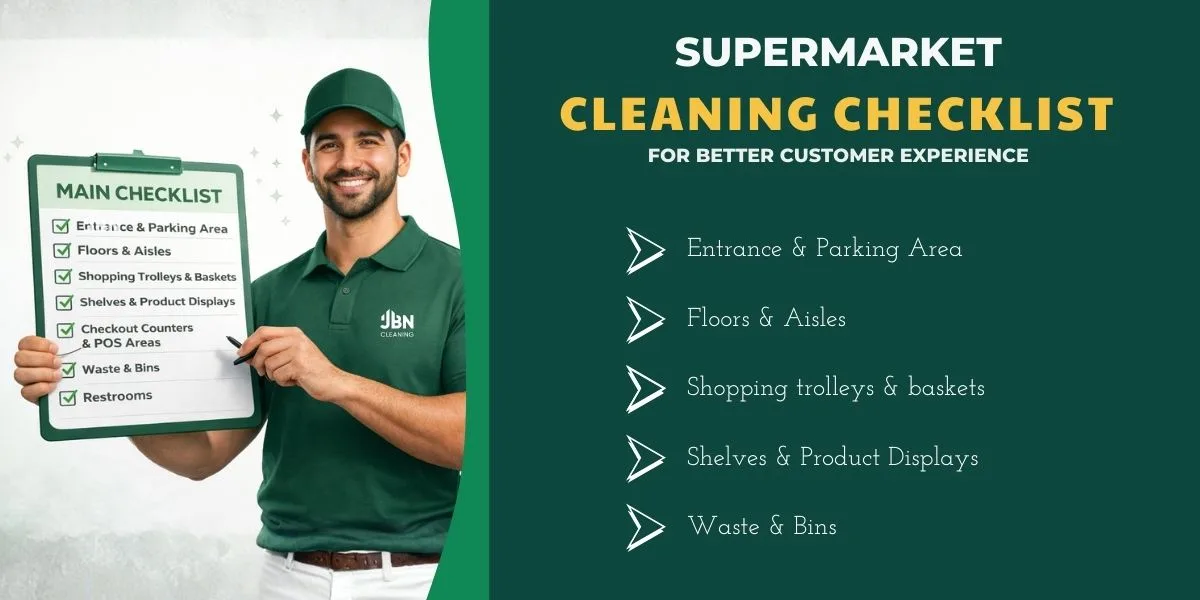
A structured supermarket cleaning checklist ensures every critical area, from entrances and floors to trolleys, shelves, checkouts, waste zones, and restrooms, meets consistent hygiene standards. Regular cleaning reduces health risks, supports food safety compliance, and maintains a safe environment for customers and staff. Clear routines also improve operational efficiency and day-to-day cleanliness control.
Supermarkets that apply disciplined cleaning processes demonstrate experience, accountability, and professionalism. Consistent hygiene builds customer trust, encourages repeat visits, and protects brand reputation in Sydney’s competitive retail market. With years of commercial cleaning experience, JBN Cleaning delivers certified, compliant supermarket cleaning services backed by strong client reviews, helping stores stay safe, hygienic, and customer-ready every day.
